Leading design through growth and constraints

How I led designers through extreme delivery pressure, shifting priorities and ongoing change, while maintaining focus and momentum.

Role

Head of Design

Industry

Fintech
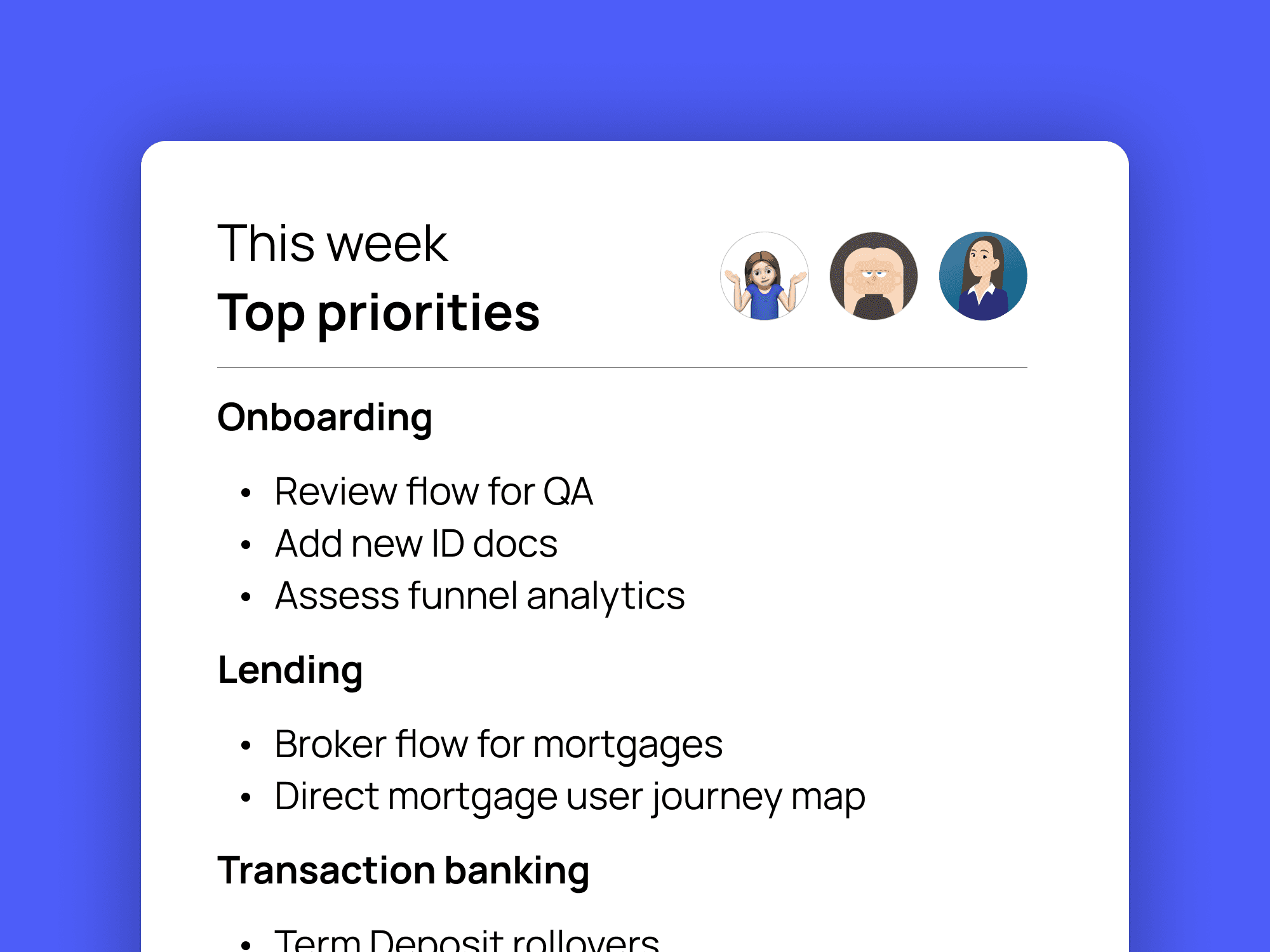
This week top priorities. Onboarding, Lending and Transaction Banking

Context

Constantinople operates in a high-growth, high-pressure fintech environment where speed and delivery are constant priorities. I joined as the company’s first designer and later stepped into the Head of Design role as the organisation continued to scale, shift direction and operate under ongoing constraints.

Throughout this time, priorities changed frequently, timelines were tight and the cost of slowing down was high.

The constraint: speed and shifting priorities

Extreme delivery pressure shaped how design needed to operate. While a backlog of work always existed, urgent priorities regularly surfaced that required immediate attention.

Traditional long-term planning quickly proved ineffective. Instead, design needed to remain responsive without becoming reactive or overwhelmed.

Adapting how we worked

To create clarity in an unpredictable environment, I introduced weekly design planning sessions aligned directly with the CPO. These sessions focused on:

  • Agreeing on the most important outcomes for the week

  • Making explicit trade-offs about what would not be worked on

  • Giving designers a clear, short-term horizon they could confidently execute against

This approach acknowledged reality rather than fighting it, while still providing structure and focus.

Context

Constantinople operates in a high-growth, high-pressure fintech environment where speed and delivery are constant priorities. I joined as the company’s first designer and later stepped into the Head of Design role as the organisation continued to scale, shift direction and operate under ongoing constraints.

Throughout this time, priorities changed frequently, timelines were tight and the cost of slowing down was high.

The constraint: speed and shifting priorities

Extreme delivery pressure shaped how design needed to operate. While a backlog of work always existed, urgent priorities regularly surfaced that required immediate attention.

Traditional long-term planning quickly proved ineffective. Instead, design needed to remain responsive without becoming reactive or overwhelmed.

Adapting how we worked

To create clarity in an unpredictable environment, I introduced weekly design planning sessions aligned directly with the CPO. These sessions focused on:

  • Agreeing on the most important outcomes for the week

  • Making explicit trade-offs about what would not be worked on

  • Giving designers a clear, short-term horizon they could confidently execute against

This approach acknowledged reality rather than fighting it, while still providing structure and focus.

My role as a leader

In this environment, my primary responsibility shifted from delivery to stability.

I acted as a buffer between rapidly changing priorities and the design team, shielding designers from unnecessary noise and helping them stay focused on what genuinely needed to be achieved each week. This involved:

  • Absorbing ambiguity from stakeholders

  • Making fast priority calls when new issues emerged

  • Helping designers let go of work that was no longer relevant

By doing this consistently, the team could maintain momentum without burning out.

What I optimised for

Given the constraints, I optimised for:

  • Clarity over certainty. Short, clear goals instead of long-term plans

  • Focus over volume. Fewer, higher-impact outcomes

  • Sustainable pace. Protecting energy in an environment that rarely slowed down
Reflection

Leading design through growth and constraints meant recognising that process still mattered, even when conditions were far from ideal. I concentrated on building lightweight, repeatable processes that gave the team enough structure to stay aligned and confident as priorities shifted week to week.

This experience shaped my leadership approach: pragmatic, people focused and grounded in reality.

Reflection

Leading design through growth and constraints meant recognising that process still mattered, even when conditions were far from ideal. I concentrated on building lightweight, repeatable processes that gave the team enough structure to stay aligned and confident as priorities shifted week to week.

This experience shaped my leadership approach: pragmatic, people focused and grounded in reality.

Other projects

Let's chat

I’m always happy to talk about design leadership, systems, or working through constraints in fast-moving teams.
If you’re interested in collaborating, hiring, or just comparing notes, feel free to get in touch.

Let's chat

I’m always happy to talk about design leadership, systems, or working through constraints in fast-moving teams.
If you’re interested in collaborating, hiring, or just comparing notes, feel free to get in touch.

Let's chat

I’m always happy to talk about design leadership, systems, or working through constraints in fast-moving teams.
If you’re interested in collaborating, hiring, or just comparing notes, feel free to get in touch.

Also partial to Earl Grey tea.

Also partial to Earl Grey tea.

Also partial to Earl Grey tea.